

If you’ve spotted a small swarm of winged insects around your windows, porch lights, or HVAC vents this month, you’re not imagining it — and you’re not alone. Late May into June is peak termite swarming season in Central Indiana, and 2026 is shaping up to be an active year thanks to a wet spring and a milder-than-average winter.
Here’s what homeowners in Indianapolis and the surrounding suburbs need to know — and what to do if you find swarmers near your home.
Think You Have Termites? Don’t Wait.
Get a free termite inspection from Bugz Bug Me — serving Indianapolis, Carmel, Fishers, Noblesville and all of Central Indiana.
What Is Termite Swarming, and Why Does It Happen Now?

A “swarm” is how termite colonies reproduce. Once a colony is mature (usually 3–5 years old), it releases winged reproductive termites called alates or swarmers. They take flight, pair off, drop their wings, and look for a new spot to start a colony.
In Indiana, the species you’ll almost always see is the Eastern Subterranean Termite (Reticulitermes flavipes) — and they swarm during the day, typically:
- April through early June
- After a warm rain
- When daytime temperatures hit the upper 60s to 70s
If you’re seeing them in late May, that’s textbook timing.
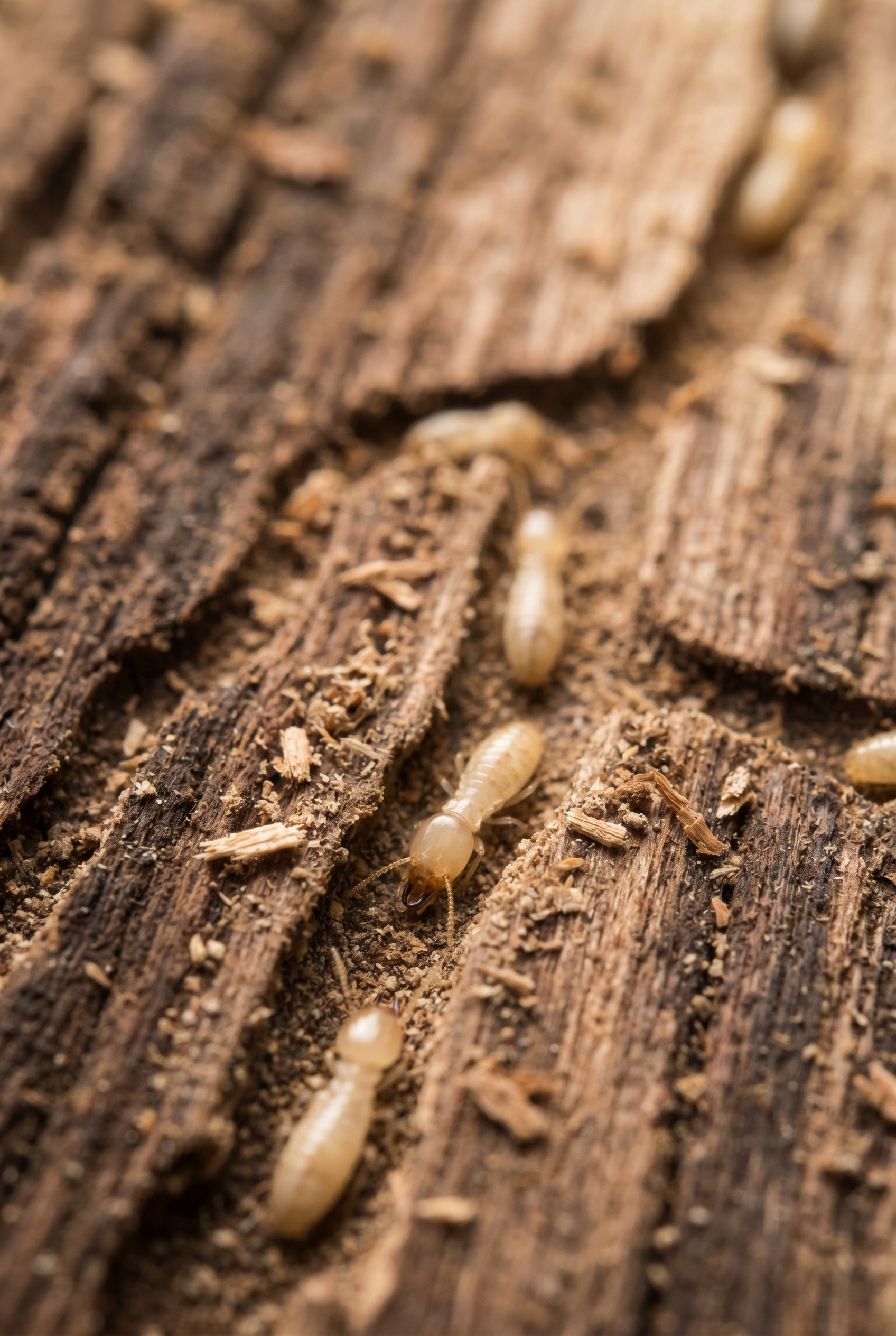
Termite Swarmers vs. Flying Ants: How to Tell the Difference
This is the single most useful skill a homeowner can have during swarm season. Many people brush off swarmers as “just flying ants” and lose months of treatment time.
| Feature | Termite Swarmer | Flying Ant |
|---|---|---|
| Waist | Straight, no pinch | Pinched, hourglass |
| Antennae | Straight, bead-like | Bent / elbowed |
| Wings | 4 wings, equal length | 4 wings, front pair larger |
| Wing texture | Milky, often shed in piles | Clear, stay attached |
| Color | Dark brown to black | Black, red, or brown |
The single biggest tell: piles of discarded, identical-length wings on a windowsill, in a sink, or near a basement vent. Ants don’t shed wings like that.
Why Central Indiana Homes Are Especially Vulnerable
Our region has the perfect storm for subterranean termites:
- Clay-heavy soil that holds moisture against foundations
- Older neighborhoods with wood-framed homes built before modern soil treatments
- Long, mild spring rains that soften soil and accelerate colony growth
- Mulch installed too close to siding — a classic termite highway
We’ve seen consistent termite pressure across our service area this spring. If you’re in one of these cities, this is the year to take it seriously:
- Termite Control in Indianapolis, IN
- Termite Control in Carmel, IN
- Termite Control in Fishers, IN
- Termite Control in Noblesville, IN
5 Signs You May Have an Active Termite Colony (Not Just a Swarm)
A swarm in your yard is a warning. A swarm inside your home is an emergency. Look for:
- Discarded wings on windowsills, near light fixtures, or in bathtubs
- Mud tubes — pencil-thin brown tunnels running up your foundation, crawlspace piers, or basement walls
- Hollow-sounding wood when tapped — especially baseboards, door frames, and crawlspace joists
- Bubbling, blistered, or peeling paint that looks like water damage but isn’t
- Tight-fitting doors and windows that suddenly stick — termite-damaged frames warp subtly before they fail
Any one of these on its own is reason to get an inspection. Two or more, and you almost certainly have an active infestation.
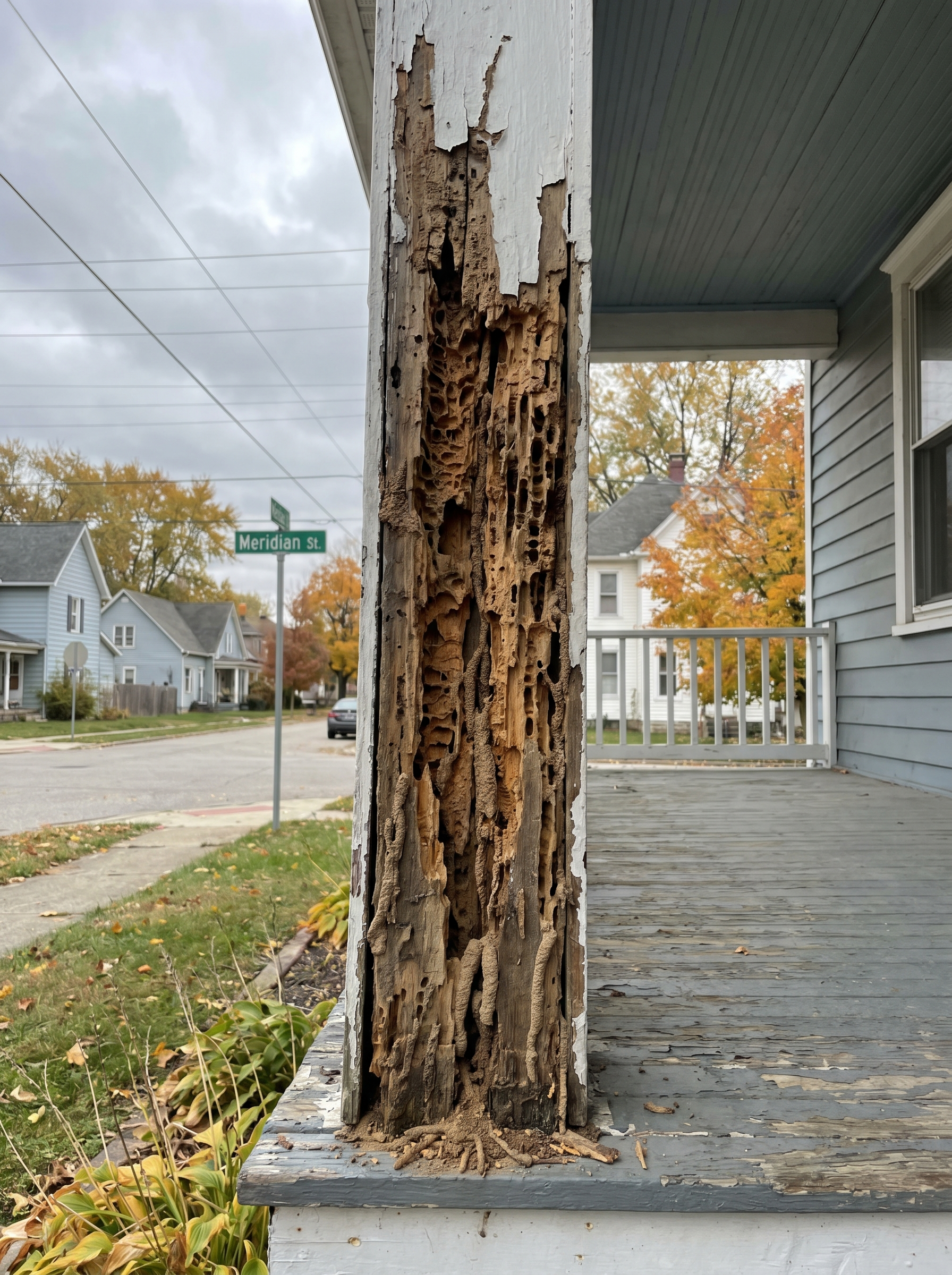
Seeing any of these signs? Get a professional termite inspection before the damage gets worse.
What to Do in the First 24 Hours
- Don’t spray over-the-counter pesticides on the swarmers. It kills the visible insects but masks the location, making professional inspection harder.
- Capture a few in a sealed bag or jar. Photos help too. This lets a technician confirm species in minutes.
- Don’t disturb mud tubes. Termites repair them quickly, but intact tubes help us map colony activity.
- Schedule a professional inspection. Subterranean termites can do thousands of dollars in structural damage before symptoms are visible.
How Bugz Bug Me Handles Termite Inspections
- Full perimeter inspection — foundation, crawlspace, attic, slab penetrations, and conducive conditions.
- Identification & mapping — we confirm species and mark all mud tubes, swarm sites, and active galleries.
- Treatment plan — typically a liquid termiticide soil treatment for active infestations, or a bait/monitoring system for prevention.
- Warranty & annual re-inspection — Indiana homes need ongoing monitoring; one-and-done isn’t real protection.
Learn more about our termite control service or request an inspection.
Frequently Asked Questions
I saw one or two winged insects — is that a swarm?
How long does termite swarming season last in Indiana?
Do swarmers cause damage themselves?
Can I treat termites myself?
How much does a termite inspection cost in Indianapolis?
Don’t Wait on a Termite Swarm
A swarm is the colony’s way of telling you it’s already been there a while. The cheapest day to treat termites is always today.
Protect Your Home Today
Serving Indianapolis, Carmel, Fishers, Noblesville, and all of Marion, Hamilton, Hendricks & Hancock counties.
📞 Call Bugz Bug Me Now