

Table of Contents
- 5 DIY Pest Control Mistakes Putting Your Family at Risk
- 1. Over-Applying Chemicals and Ignoring Pesticide Label Instructions
- 2. The Misconception That Green or All-Natural Means Non-Toxic
- 3. Using Aerosol Insecticide Foggers and Bug Bombs
- 4. Neglecting Personal Protective Equipment and Safety Gear
- 5. Relying on Ultrasonic Pest Repellents and Ignoring the Source
- Protecting Your Home with Professional Pest Management
- Comparing DIY vs. Professional Pest Management
- Frequently Asked Questions About DIY Pest Control
5 DIY Pest Control Mistakes Putting Your Family at Risk
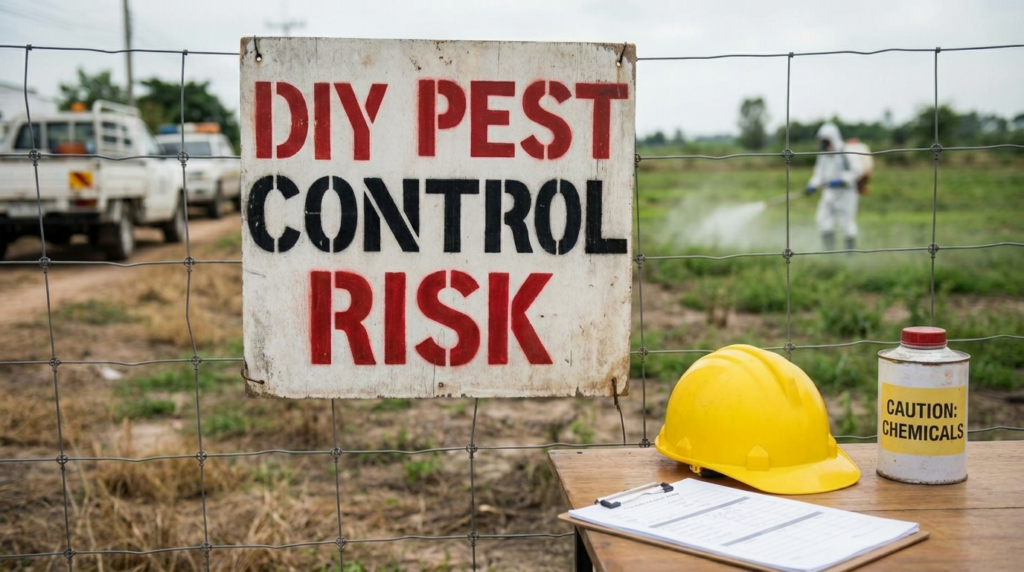
Discovering ants trailing across your kitchen counter or hearing scratching within your walls can instantly disrupt your peace of mind. As an Indiana homeowner, your property is your sanctuary; realizing pests have invaded is both unsettling and stressful. It is natural to feel a sense of urgency to protect your family.
It’s essential to be aware of common DIY Pest Control Mistakes that homeowners make. Recognizing these mistakes can significantly improve your pest control efforts.
Often, the first instinct is to rush to the hardware store for a DIY kit or chemical spray. At Bugz Bug Me, we understand this reaction comes from a place of care for your children and pets. However, well-intentioned DIY efforts frequently backfire, inadvertently making the infestation more resilient or creating unnecessary safety hazards. Taking the wrong approach can transform a minor nuisance into a persistent, expensive crisis. To ensure your home remains a safe haven, we have outlined five common mistakes homeowners make when attempting to manage pest control on their own.
Many homeowners unknowingly commit DIY Pest Control Mistakes that worsen their pest problems. Understanding these frequent errors will help you take the right steps to protect your home.
For help now contact us!
1. Over-Applying Chemicals and Ignoring Pesticide Label Instructions
In this article, we’ll highlight the most common DIY Pest Control Mistakes and how to avoid them for effective pest management.
One of the most frequent pest control mistakes is the “more is better” mentality. Many homeowners skip reading the pesticide label instructions and apply far more product than is safe or necessary, mistakenly believing a heavier dose will yield faster results. In reality, excessive application rarely improves efficacy and often leads to chemical runoff or persistent odors.
Failure to follow label instructions can cause acute poisoning, long-term environmental damage, and ineffective treatment. These labels are legal documents that specify precise application areas, specific pest targets, and critical reapplication intervals. Ignoring these mandates can result in pests developing chemical resistance, making future eradication efforts significantly more difficult and expensive.
When you over-apply store-bought products, you unnecessarily increase pesticide toxicity levels in your living spaces. This creates a dangerous chemical residue on porous surfaces where children play or on countertops where food is prepared. Adhering to the recommended dosage ensures you manage the infestation while maintaining a healthy, non-toxic home environment.
2. The Misconception That Green or All-Natural Means Non-Toxic
Many families instinctively reach for natural pest control solutions or “green” pesticides under the dangerous assumption that they are completely harmless. However, equating “all-natural” with “non-toxic” is a significant misunderstanding of chemical properties. Nature produces some of the most potent toxins known, and concentrated botanical extracts can be just as hazardous as synthetic alternatives if handled incorrectly.
Learning about these DIY Pest Control Mistakes is crucial for any homeowner looking to maintain a pest-free environment.
While these products are often aromatic, using essential oils like peppermint, clove, or rosemary, they can still trigger severe respiratory issues, allergic reactions, or chemical skin irritation upon contact. Furthermore, because botanical formulas often lack the residual power of standard pesticides, they are frequently less effective for long-term management. This leads homeowners to apply them in massive, unregulated quantities to compensate for poor results. This over-application creates a false sense of security while inadvertently introducing high concentrations of volatile organic compounds into the home environment, potentially compromising indoor air quality for children and pets.
By avoiding these DIY Pest Control Mistakes, you can ensure a safer and more effective approach to managing pests in your home.
3. Using Aerosol Insecticide Foggers and Bug Bombs
In summary, acknowledging DIY Pest Control Mistakes can prevent further issues and safeguard your loved ones.
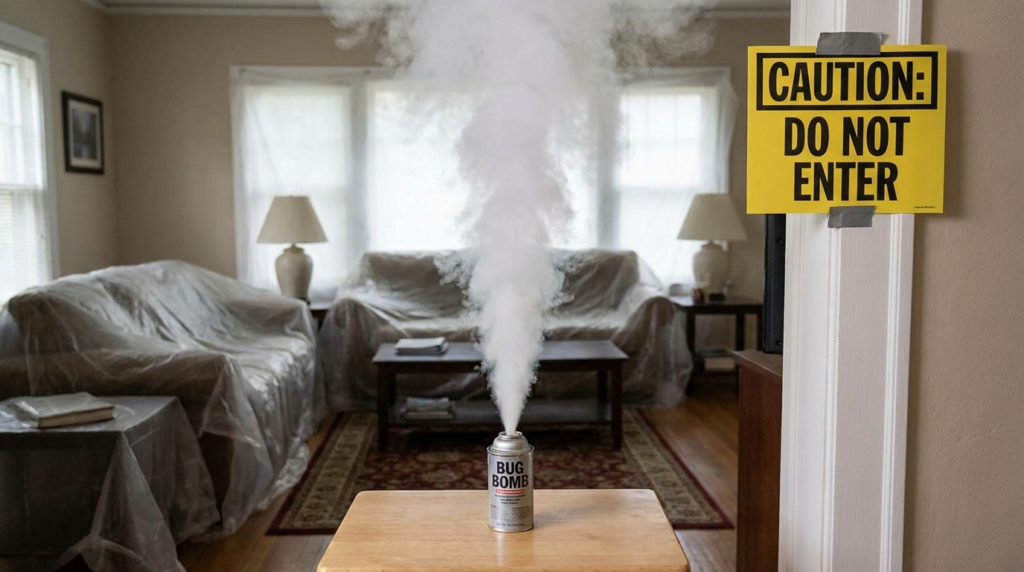
Aerosol insecticide foggers, commonly known as bug bombs, are a popular but high-risk DIY pest control method. These devices are often ineffective because the chemicals degrade quickly and fail to reach pests hiding inside wall voids, deep crevices, or under floorboards. Instead of penetrating these shelters, the mist settles only on exposed surfaces, leaving the core of the infestation untouched.
The biggest danger is the toxic chemical residue they leave behind. Unlike a targeted professional treatment, foggers coat every square inch of your home in a fine pesticide film. This includes sensitive areas like mattresses, children’s toys, and kitchen counters where food is prepared.
Furthermore, bug bombs are highly flammable; the pressurized propellants can be triggered by a simple pilot light or electrical spark, leading to house fires. Rather than eliminating the problem, the harsh fumes often scatter pests like cockroaches and bed bugs deeper into the structure of the house, making the original infestation even harder to eradicate.
4. Neglecting Personal Protective Equipment and Safety Gear
When performing do-it-yourself pest control, many homeowners inadvertently neglect to wear the proper personal protective equipment (PPE). Unlike amateurs, professional pest control technicians strictly adhere to safety protocols, utilizing specialized gear specifically designed to prevent chemical exposure and dermal absorption.
Most professional-grade pesticides carry legal requirements for safety precautions, including chemical-resistant nitrile gloves, N95 or half-face respirators, and sealed eye protection. Neglecting these essential barriers can lead to immediate health risks, such as skin irritation or dizziness, as well as severe long-term complications from inhaling concentrated vapors or fine mists during application.
Furthermore, without the right gear, you risk inadvertently bringing toxic pesticide residue into your car or laundry room. This type of cross-contamination often spreads chemicals to high-touch surfaces, putting your entire family and pets at risk long after the initial application is finished. Investing in the correct PPE is not just a recommendation, it is a critical necessity for safe chemical handling.
Ultimately, being aware of these DIY Pest Control Mistakes will help you make informed decisions about pest management strategies.
5. Relying on Ultrasonic Pest Repellents and Ignoring the Source
It is tempting to purchase an ultrasonic pest repellent from a big-box store or an online retailer, hoping for a clean, chemical-free, and effortless fix. However, over a decade of independent scientific research consistently demonstrates that these high-frequency devices are incapable of providing long-lasting pest control. While they may cause momentary discomfort, pests quickly habituate to the noise.
Resilient pests like cockroaches and rodents are often discovered nesting directly behind or underneath these devices despite glowing marketing testimonials. Relying on these gadgets creates a false sense of security, allowing an infestation to grow unchecked while you assume the problem is being managed.
Ignoring the primary source of a nest or neglecting seasonal entry points is a major pitfall in DIY management. Whether you require professional ant control, spider control, or rodent exclusion, you must prioritize mechanical solutions. This includes sealing structural gaps, addressing moisture issues where pests breed, and identifying the specific outdoor reservoirs fueling the indoor activity.
Protecting Your Home with Professional Pest Management
Remember, recognizing DIY Pest Control Mistakes is just as vital as implementing effective pest control techniques.
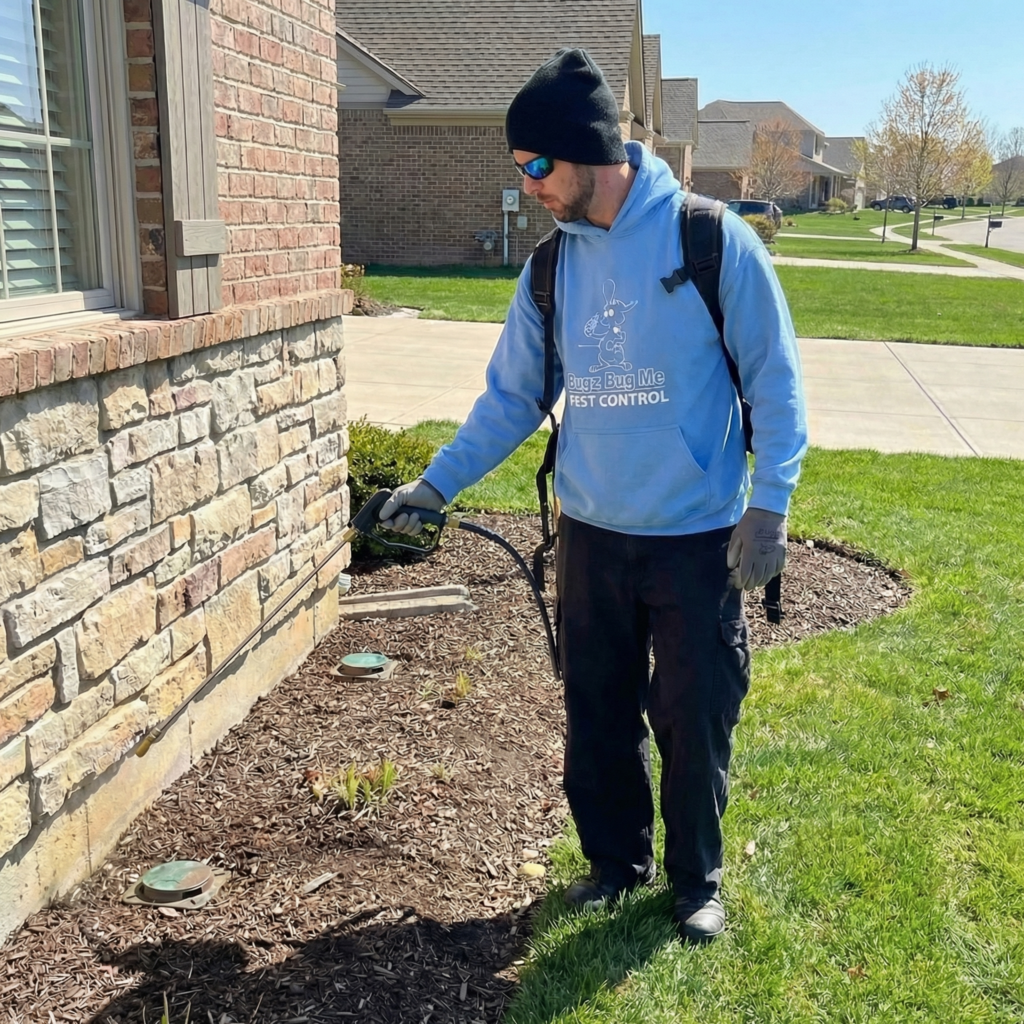
DIY methods often fall short when dealing with wood-boring beetle control, stinging insect control, or complex termite control. Delaying professional help for wood-destroying insects can lead to thousands of dollars in structural damage.
Addressing these DIY Pest Control Mistakes can drastically change the outcome of your pest management efforts.
Residential pest control requires a deep understanding of pest behavior and environmental safety. From cockroach control to managing overwintering pests, a professional approach ensures the job is done right the first time.
At Bugz Bug Me, we focus on low-odor pest materials and integrated pest management to keep your home a sanctuary. We prioritize the safety of your kids and pets while providing effective, reliable service.
Don’t let a small pest problem turn into a major hazard. Contact your local neighbors at Bugz Bug Me today for a professional pest control service that puts your family first.
Comparing DIY vs. Professional Pest Management
We’ll also explore the impact of common DIY Pest Control Mistakes and how they affect your home environment.
Deciding between handling a pest infestation yourself or hiring a local expert like Bugz Bug Me is a critical choice for your home’s long-term safety. While a quick trip to the hardware store for consumer-grade sprays seems convenient, these retail products often fail to address the root of the problem, leading to recurring outbreaks. Professionals bring specialized knowledge of local pest biology, ensuring that treatments are not just temporary fixes but long-term solutions.
Understanding DIY Pest Control Mistakes helps you prioritize effective strategies for maintaining a pest-free home.
| Feature | DIY Methods | Bugz Bug Me Professional Service |
|---|---|---|
| Product Strength | Consumer-grade (Lower potency and shorter residual life) | Professional-grade (Targeted, highly effective formulas) |
| Safety Knowledge | User must interpret complex labels and safety risks | Trained technicians ensure strict pet and child safety |
| Targeted Treatment | General spraying (Broad application with missed spots) | Source-specific (Focusing on nests and hidden entry points) |
| Equipment | Basic hand-pump sprayers or simple glue traps | Advanced thermal detection and precision application tools |
| Long-Term Cost | High cumulative costs due to repeated product failures | Predictable, fair pricing for comprehensive, lasting results |
Frequently Asked Questions About DIY Pest Control
Finally, let’s dive into the top DIY Pest Control Mistakes that can compromise your pest management success.
Are all-natural pesticides and green pesticides completely safe for my pets?
Natural doesn’t always mean non-toxic. Many “green” products utilize concentrated essential oils that can cause severe respiratory distress or skin irritation in pets. Professional application ensures these substances are used at safe, effective concentrations.
Why didn’t the bug bomb I used clear out the cockroach control issues?
Aerosol foggers fail because they cannot penetrate the deep wall voids where cockroaches nest. Instead, they coat your living surfaces in chemical residue, often driving pests deeper into the structure rather than eliminating the colony.
Do ultrasonic pest repellent devices actually work for rodent control?
Research consistently shows that ultrasonic devices are ineffective for long-term control. Rodents quickly habituate to the sound waves, often nesting directly behind the devices without any disruption to their breeding or feeding habits.
How do I know if I have termites or just a wood-boring beetle?
Differentiating between wood-destroying insects is nearly impossible for the untrained eye. Because termites require vastly different treatment strategies than beetles or carpenter ants, a professional inspection is vital to prevent irreversible structural damage.
References
Make sure to avoid the DIY Pest Control Mistakes mentioned in this article to keep your home safe.
By learning about DIY Pest Control Mistakes, homeowners can enhance their pest control practices.
The key to effective pest management is understanding and avoiding DIY Pest Control Mistakes.
In conclusion, being aware of DIY Pest Control Mistakes can save you time, money, and stress.
Don’t forget to consider how DIY Pest Control Mistakes can impact your efforts in maintaining a pest-free home.